When it comes to the Baseball Hall of Fame or any sports Hall of Fame, I’m brutal when judging a player as worthy of the hall-of-fame, and I think the Hall of Fame should be reserved for the GREATS and IMMORTALS of this sport. If I drive to Cooperstown, I’m not interested in seeing the plaques of very-good ball players. Over the past years, guys like Barry Larkin and Scott Rolen have gotten in on the BBWAA ballot, and guys like Harold Baines and Alan Trammel get in on the Executive Committees. While I respect the careers of those guys, I think it’s ridiculous that those guys got in; those four guys were “Very-Good,” not “Great” or “IMMORTAL.” I also do not give a crap about anything about a player other than their performance on the field.
As someone who is a history junkie when it comes to baseball, based on my criteria, there are only five guys that aren’t in the Hall of Fame that the writers missed the boat on. My list consists of four hitters and one pitcher, and these are guys who aren’t eligible for any upcoming (BBWAA ballots), and I’m excluding guys linked to Steroids and players on the Ineligible list.
- Carlos Delgado
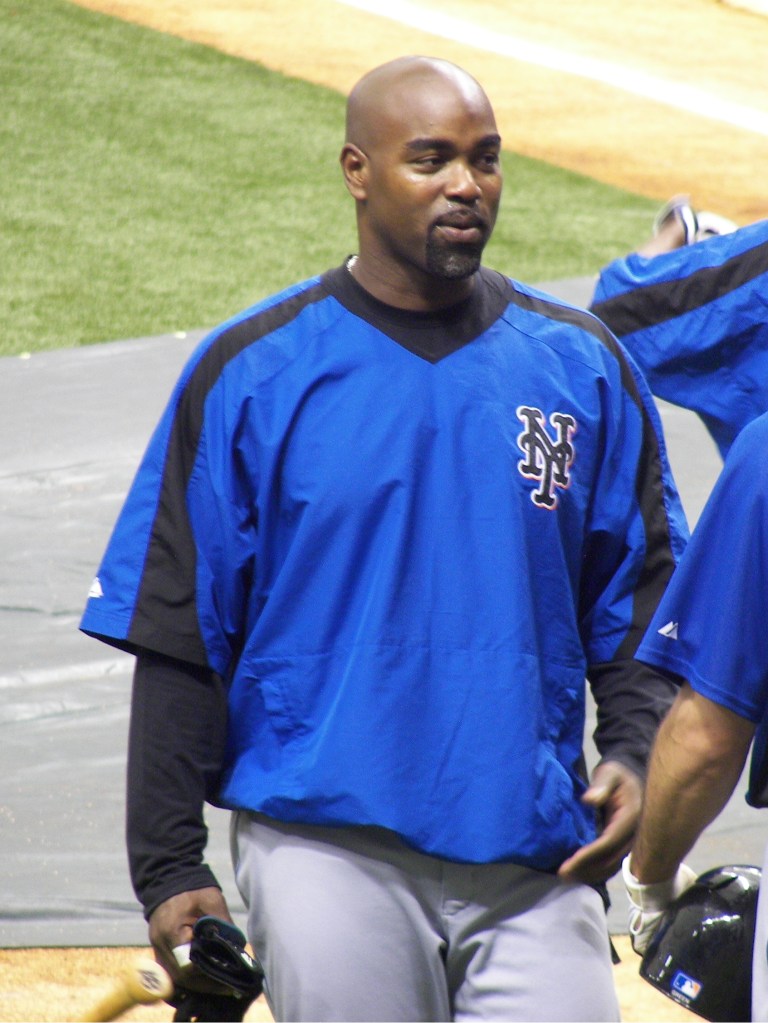
(1993-2009) Career Statistics:
.280 BA, 2,038 HITS, 473 HR, 1,512 RBI, .383 OBP, 1,241 RUNS
The career of Carlos Delgado is overlooked in the same way Fred McGriffs’ was due to playing in the Steroid Era. Delgado was never linked to steroids and had ten consecutive seasons of slugging 30 or more home runs and driving in 100 or more RBIs nine times. In 2003, he finished runner-up to Alex Rodriguez in the AL MVP voting. That year, he led the majors with 145 RBIs and had a higher AVG and OBP than Alex. I love Arod, but 2001-2003 were years that he played around with PEDs, so you can argue that Delgado won the award. At the end of his career with the Mets coming off a 38-home-run season, he hurt his hip, which resulted in him calling it a career in 2009, just 27 shy of 500 Home Runs.
I understand he was never considered the best of his time going up against other dominant first basemen like Albert Belle, Jeff Bagwell, Mark McGwire, Frank Thomas, Rafael Palmeiro, and others during his prime, which is why he only has a handful of All-Star game selections and Silver Sluggers, also only having a few black types on the back of his baseball card. However, with over 1,500 career RBIs and over eight seasons driving in 100 RBIs, that’s a Hall of Famer to me. One more thing, his career Fielding Percentage at first base was .992.
- Al Oliver
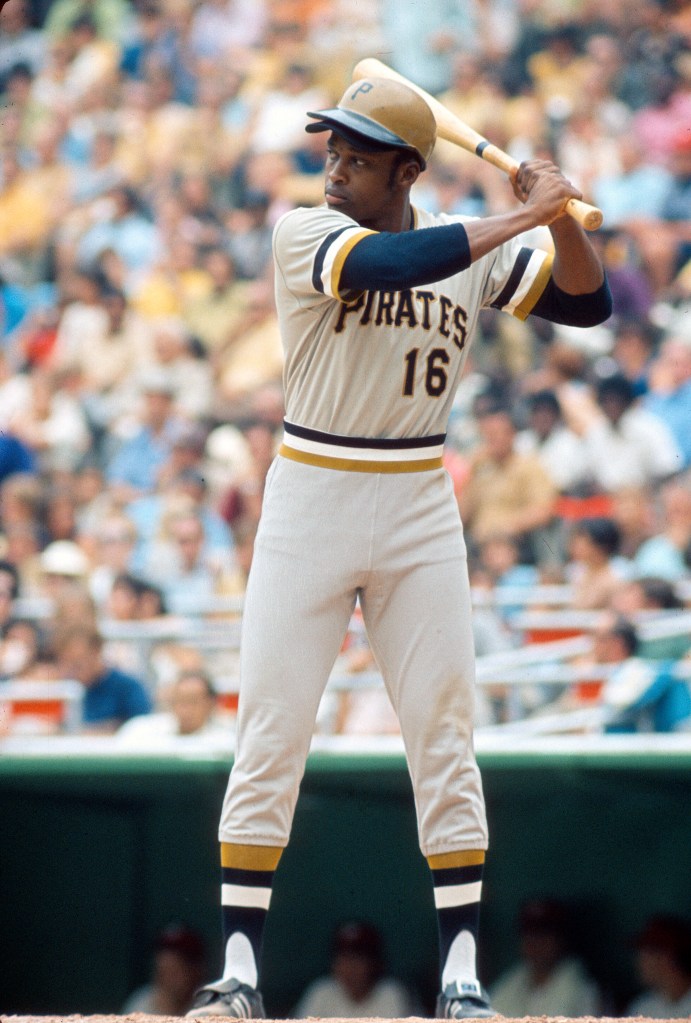
(1968-1985) Career Statistics:
.303 BA, 2,749 HITS, 219 HR, 1,326 RBI, .344 OBP, 1,189 RUNS
I understand that only making seven All-Star teams and winning three Silver Sluggers over eighteen seasons doesn’t sound like a Hall of Famer. However, throughout 9,000 plus At-Bats, Oliver is a lifetime .303 hitter. In 1982, he finished third in the NL MVP voting; however, he led the NL in HITS 204, RBIs 109, and AVG .331 and had a higher OBP than the guys who finished ahead of him on a poor Expos team; he should’ve won the MVP that year. Also, eleven times he hit for over .300, nine consecutively. He was top-10 in HITS and AVG ten times in his prime and Doubles nine times.
Had it not been for a few injuries in the middle of his career and during his last two seasons, Oliver likely would’ve eclipsed the 3,000 Hit milestone. Also, he drove in many RBIs as a leadoff hitter. Ultimately, what gives him my endorsement is maintaining an over .300 Average throughout over 9,000 At Bats.
- Albert Belle
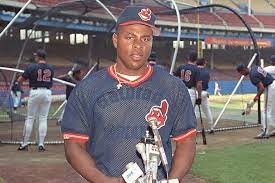
(1989-2000 Career Statistics:
.295 BA, 1,726 HITS, 381 HR, 1,239 RBI, .369 OBP, 974 RUNS
Albert Belle, I get it; he was a pain in, you know what, with reporters, teammates, coaches, and others, on and off the field. I also understand that the volume does matter when judging a player for the Hall of Fame. Belle only played twelve seasons; however, nine years consecutively, he drove in 100 or more Runs. He has black type on the back of his baseball card, leading the league in Runs, Doubles, Homeruns, and three times Runs Batted In. Belle wasn’t just a swing-for-the-fences hitter, averaging 182 Hits per 162-game season. In 1995, in a shortened 144-game season, Belle hit 52 Doubles and 50 Home Runs. He is the ONLY player in baseball history to hit 50 home runs and doubles in a season, accomplishing that as a right-handed hitter.
I will also acknowledge that he was busted for using a “corked bat.” Also, fielding was something other than what Belle amazed anyone. However, the same with Delgado; you have eight or more seasons with 100 or more RBIs, which gives you my endorsement. Belle was clean from PEDs and was arguably good enough to rightfully win the AL MVP award in 94, 95, 96, & 98. Unfortunately, his reputation with writers didn’t help him. If not for a career-ending hip injury at 33, Belle would’ve easily eclipsed the 500 career Home Run and 1,500 Runs Batted In milestones, which gets you in the Hall of Fame. If Belle didn’t act out the way he did, he would’ve gotten in by now.
- Jeff Kent

(1992-2008) Career Statistics:
.290 BA, 2,461 HITS, 377 HR, 1,518 RBI, .356 OBP, 1320 RUNS
Jeff Kent is a no-brainer. For my buck, he ranks as the fifth-greatest Second Baseman in baseball history behind Hornsby, Collins, Lajoie, and Gehringer. Most home runs by any second baseman to play and the third most RBIs by any Second Baseman.
Offensively, he had eight years in which he drove in over 100 runs. Everything clicked for him when he arrived in San Francisco, he and Bonds may not have been the best of friends, but they were a great 3-4 duo. From an offensive standpoint, Jeff Kent has better numbers than other Hall of Fame Second Baseman such as Roberto Alomar, Craig Biggio, Ryne Sandberg, and even Joe Morgan. Second Basemen aren’t known for leading the league in big offensive categories, so the black type isn’t there. However, in 2000 one of the years in which Bonds was supposedly doing PEDs, he won the MVP, and rightfully so. (.334 BA, 196 HITS, 33 HR, 125 RBI, .424 OBP)
Unfortunately, he isn’t in the Hall of Fame. People have said that he wasn’t a good defensive second baseman. Oh, he played 17 seasons and didn’t win a Gold Glove once? Yes, earlier in his days with the Mets and Indians, he did struggle defensively, but by the time he got to San Francisco, he got better. You look at his Fielding Percentages; they were up there; his lifetime was .980%. Even if he was a terrible defensive Second Baseman, his offensive production made up for it. Was he a headache with people and media? Yes. Did he benefit from hitting behind Bonds? Yes, but Lou Gehrig also helped by hitting behind Babe Ruth.
Curt Schilling

(1988-2007) Career Statistics:
216-146 W-L, 3.46 ERA, 3,261.0 IP, 3,116 SO, 1.137 WHIP
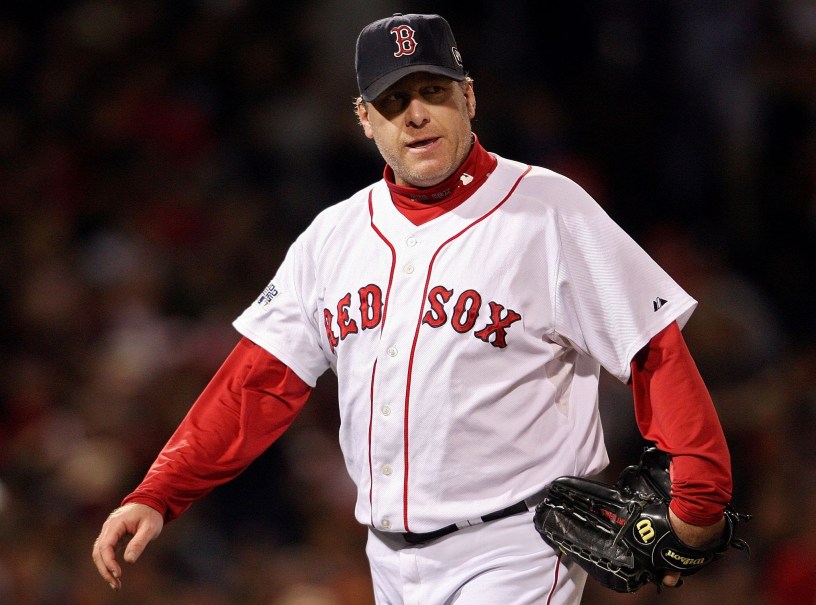
Last but not least, my pitcher, Curt Schilling. Unfortunately, Schilling, over the years, developed a very unattractive social media profile, angering people such as writers. It’s not a slam dunk, but it’s debatable, with Schilling being HOF-worthy. He would have gotten in four or five years ago if it had not been for his profile. Looking at the back of the baseball card, I can’t come up with eight or more years that you or I would consider (Hall of Fame Years); he has six—three of them with the Phillies, two with the Diamondbacks, and one in Boston. Regarding Schilling being a Hall of Famer, I have two arguments the Regular season and the Postseason.
Regular season-wise, considering that he pitched in the Steroid Era, where he didn’t do any of them, his numbers are significant—leading the league in Wins, Innings Pitched, Strikeouts, and WHIP twice. He’s got over 3,000 career Strikeouts, considered a Hall of Fame Pitching milestone. He never won a Cy Young only because twice he lost to one of the true all-time greats, Randy Johnson. Going back to Philly, where he spent the bulk of his career. The Phillies only made the playoffs once during his time there, and he still was able to put together some good pitching years on a not-so-good team.
Postseason-wise, you will not be able to find a better postseason pitcher than Curt Schilling. As a Phillie, he won the 1993 NLCS MVP, and with the Diamondbacks, in 2001, he and Johnson were the co-MVPs of the World Series; in Boston, he pushed through an ankle injury in Game 6 of the ALCS winning that game. Overall in the playoffs, Schilling was 11-2, along with a 2.23 ERA, 0.968 WHIP over 133.1 Innings. Life is on the line; you want Schilling on the mound.
References:
- Carlos Delgado Career Statistics via Baseball-Reference: https://www.baseball-reference.com/players/d/delgaca01.shtml
- Al Oliver Career Statistics via Baseball-Reference: https://www.baseball-reference.com/players/o/oliveal01.shtml
- Albert Belle Career Statistics via Baseball-Reference: https://www.baseball-reference.com/players/b/belleal01.shtml
- Jeff Kent Career Statistics via Baseball-Reference: https://www.baseball-reference.com/players/k/kentje01.shtml
- Curt Schilling Career Statistics via Baseball-Reference: https://www.baseball-reference.com/players/s/schilcu01.shtml
 MLB Past & Present
Lou Whitaker needs to be on a list like this. Half of the greatest DP combo in league history. Tram finally made it in. Time for Lou to join him.
LikeLike
only Shilling is ahead of Vada Pinson
LikeLike